About
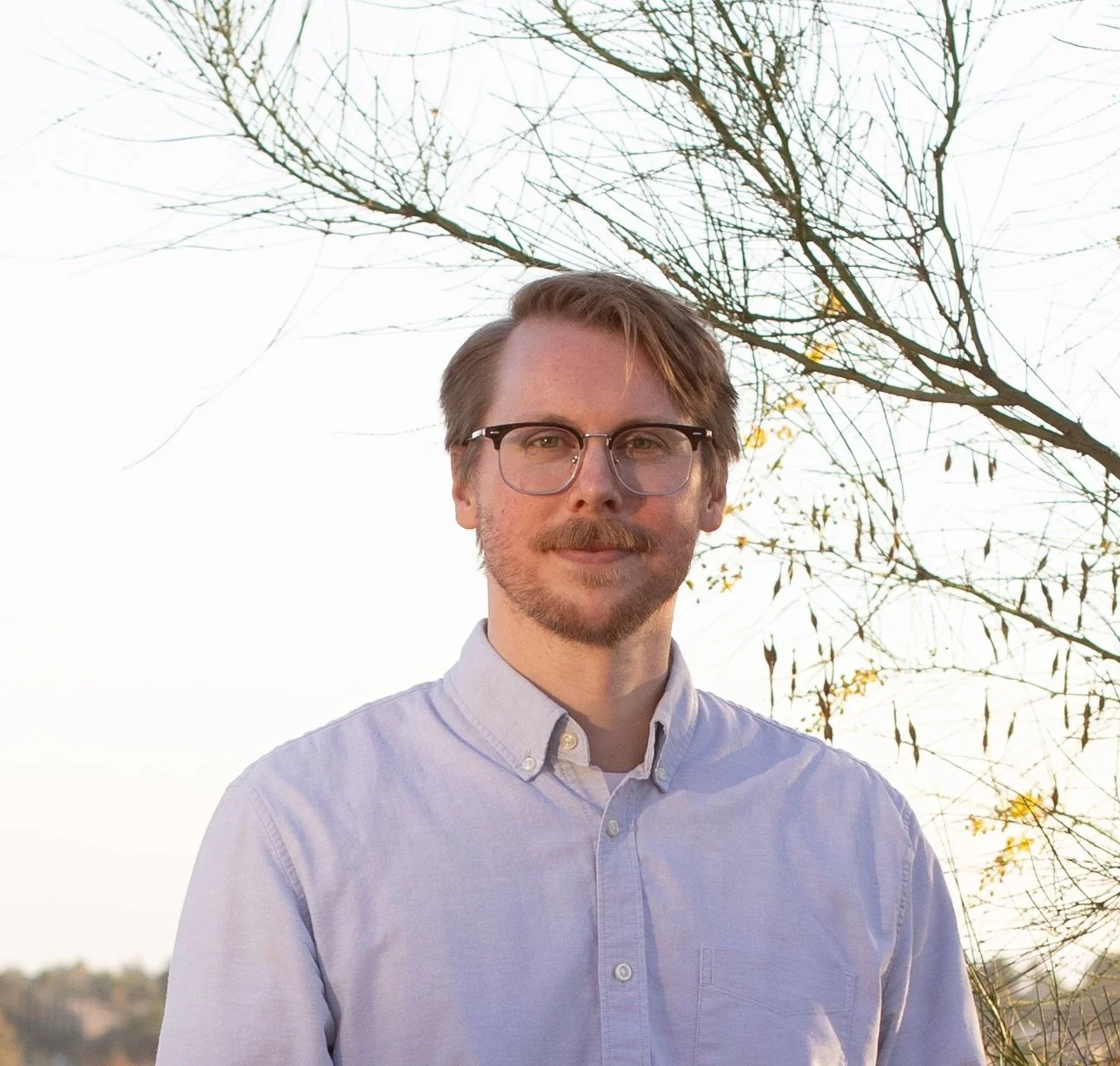
Hi, I’m Luke.
Here’s who you’d be talking to.
I’m a licensed clinical social worker in California, and I work online with adults who carry a lot and rarely get asked how they’re doing.
Book a free 15-minute call →A short call to see if we’re a good fit. Say as much or as little as you like. Camera optional.
My approach
What it’s like to work with me
I sometimes think of therapy as dumping a puzzle out onto the table without knowing what the picture on the box is supposed to look like.
We can start by getting curious about what’s there. You don’t have to arrive with a clear explanation of what’s wrong, and nothing you say has to be your final answer. Sometimes we just need to say something out loud and let it sit. The next session you can take it back, and I’m okay with that.
This is a space to make sense of things together, with some patience for the process and for yourself.
Warm and accepting
There’s no need to arrive with a tidy story or the right words. “Here’s what’s going on and I don’t even know how to make sense of it” is a perfectly good place to start.
Deeply listening
I listen for what’s underneath what gets said, and I’ll tell you what I’m noticing along the way, because an hour of polite agreement isn’t much use to anyone.
Room for it all
The capable parts, the exhausted parts, the humor, and the heavy stuff are all welcome, and none of it has to be tidied up first.
Plain language
No jargon unless it earns its place, and if I use a term I’ll explain it. If one of your own images, like a weight, a wall, or energy, says it better than a clinical word, we’ll use yours.
I’d rather help someone keep what’s good about how they work than file it down.
My story
A bit about me
I didn’t start out planning to become a therapist. I thought I wanted to be a teacher.
I worked as a tutor and then a substitute teacher, and somewhere along the way I realized that what I enjoyed most wasn’t necessarily teaching a subject. It was working with individual students, getting to know how they thought, and seeing something begin to change.
I’d always been interested in psychology. Studying sociology, particularly social psychology, opened my eyes to how much of what we think, feel, and do is influenced by processes we’re barely aware of. That curiosity, along with how much I enjoyed working one-on-one, eventually led me toward therapy.
At first, I thought I’d work with children. But during my clinical training, a few people encouraged me to explore other settings, and I’m glad I listened. My work has since taken me through schools, psychiatric hospitals, work with veterans, county mental health, and private practice. Along the way, I discovered how much I enjoy working with adults.
I’m a licensed clinical social worker in California, trained at California Baptist University and licensed in 2024.
I’m particularly drawn to people dealing with anxiety, perfectionism, and people-pleasing because some of those patterns are familiar to me, too. In a way, I speak the language. I understand how something that looks like being responsible, thoughtful, or driven from the outside can feel very different on the inside.
What I love most about this work is being invited into someone’s world.
I get to hear people’s stories, make sense of things alongside them, and sometimes be there when something shifts and they begin to see a little more possibility than they did before.
It’s a privilege to be part of that process, and one I don’t take lightly.
I don’t hold a specialty certification in anxiety, perfectionism, or people-pleasing. What I have is training, experience across a range of settings, and a group of people I understand well and work well with.
(That’s the résumé version. The rest comes out in sessions.)

Who I work with
The people I tend to work with
Most of the people who come to me are the reliable ones. They run teams, businesses, households, and group chats, they know what a room needs before anyone says it, and they’ve gotten very good at making things look easy. They’re also tired in a way that’s hard to explain to someone who hasn’t felt it.
The details vary, and I read them as three overlapping patterns:
High-functioning anxiety
Preparing, checking, and bracing, even when everything is going well.
Learn more →Perfectionism and burnout
A standard that moves every time it’s met, and rest that keeps getting rescheduled.
Learn more →If you’re still doing the days and paying for them at night, you’re in the right place.
In session
What we actually do
Sessions are 50 minutes, online, and more conversation than lecture. Roughly, they go like this:
We start with what’s most alive this week.
Not a prepared agenda, just whatever is taking up the most room.
We get curious about the passengers.
The part that’s bracing, the part that’s tired, the part that says yes too quickly. None of them is wrong, and each has been trying to help.
Sometimes there’s a small experiment.
Something to try or notice, to see what changes, never a test to pass.
We check in on whether it’s useful.
If something isn’t working, that’s information, and I’d like to hear it.
Homework is optional. Therapy isn’t a quick fix, and I’d rather say so than promise otherwise, but many people notice small shifts along the way, and we keep checking that the direction still feels right.
The practical part
Getting started
A free 15-minute call
Relaxed, and you can ask me anything.
An intake session
We look at where you’ve been, what you’re dealing with now, and where you’d like to go.
Ongoing 50-minute sessions
Online, at a pace that fits, and homework is optional.
Goals are a big part of therapy, and they don’t have to be perfectly worded. They’re more like a destination we map out together, and they can change along the way. My job is to keep checking that we’re headed toward what matters to you.
Who this isn’t for
I’d rather be upfront about who I’m not the right fit for than have anyone find that out in session three. If one of these sounds like what you need, that’s not a failing on your part. It just means someone else will serve you better, and I’m happy to say so on the free call.
- Anyone in a mental health crisis or at immediate risk
- Court-involved or court-ordered therapy
- Primary treatment for substance use or addiction
- Couples or family therapy
- Teens and children, since I work with adults only
I offer individual outpatient therapy rather than emergency or crisis services.
If you’re in crisis, call or text 988. If you’re in immediate danger, call 911.
Before you ask
Common questions
Do you offer in-person sessions?
No. Everything is online, for adults who are located in California at the time of the session.
What if we’re not a good fit?
That’s one of the reasons I offer a free 15-minute call. You can ask questions, get a sense of how I work, and decide whether it feels right. If I think another therapist or kind of support would be a better fit, I’ll be upfront about that. And you’re welcome to decide the same about me.
I’ve been in therapy before and it didn’t help. Is this different?
It might be, but I wouldn’t want to promise that without knowing what your previous experience was like. We can talk about what did and didn’t work, what you’re hoping for now, and what might be worth trying differently. You don’t have to start from scratch or pretend your earlier experience was helpful if it wasn’t.
Start here
Start with a free
15-minute call
Bring questions about me, too. This goes both ways, and it’s meant to be an easy first step.
Book a free 15-minute call →(I’ll answer honestly, including with “I don’t know.”)